TL;DR:
- UK enterprises face costly IT downtime averaging £11,000 to £18,500 per minute.
- Modern monitoring integrates visibility, AI-driven anomaly detection, and security for better incident prevention.
- Shifting from SLAs to XLAs emphasizes user experience metrics, aligning IT success with business outcomes.
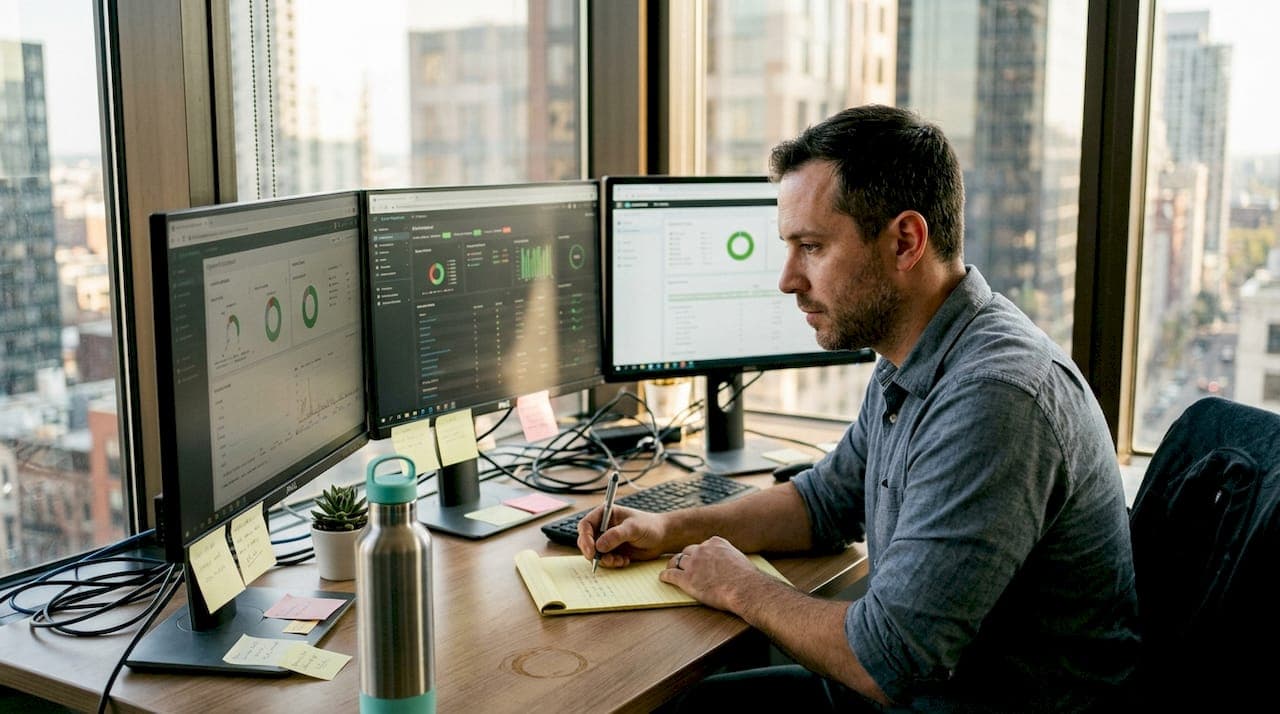
Downtime is not just an IT inconvenience. For UK enterprises, it is a financial emergency that strikes without warning. High-impact IT outages cost between £11,000 and £18,500 per minute, with major incidents exceeding £1 million per hour. Yet most IT leaders still treat monitoring as a background function rather than a strategic priority. This guide breaks down what modern IT monitoring actually means, where organizations go wrong, and how to use it to sharpen security, streamline operations, and accelerate digital transformation across your enterprise.
Table of Contents
- Why IT monitoring matters: A high-stakes landscape
- Core functions of modern IT monitoring
- From SLAs to XLAs: Evolving expectations and frameworks
- Practical challenges and best practices for UK enterprises
- Our take: What most IT monitoring advice misses
- Take the next step with Mighty Sky Technologies
- Frequently asked questions
Key Takeaways
| Point | Details |
|---|---|
| Downtime costs add up | Unplanned IT outages can drain millions from UK enterprises each year. |
| Integrated monitoring is crucial | Unified, proactive platforms cut downtime, boost security, and support digital transformation. |
| Shift to user experience | Modern IT monitoring tracks user satisfaction, not just system uptime. |
| AIOps delivers better outcomes | AI-powered monitoring dramatically lowers incident numbers and resolution times. |
| Transparency builds trust | Open communication on monitoring practices fosters a healthy workplace and legal compliance. |
Why IT monitoring matters: A high-stakes landscape
The numbers are hard to ignore. UK and Ireland businesses face a median annual cost of $38 million from high-impact IT outages. That figure represents lost productivity, emergency response costs, and the slower-burning damage to customer trust and brand reputation. Proactive monitoring is one of the clearest levers available to reduce that exposure, yet many enterprises still rely on fragmented, reactive tools that only alert teams after something has already broken.
The visible damage from downtime is only part of the story. Hidden risks compound the problem significantly:
- Regulatory exposure: Prolonged outages in regulated sectors like finance or healthcare can trigger compliance violations under UK GDPR or FCA rules.
- Customer churn: Studies consistently show that users abandon services after two or three poor experiences. A single outage can accelerate that decision.
- Brand erosion: Negative press from a public-facing outage is difficult to quantify but very real in its long-term impact.
- Internal productivity loss: Every hour your teams spend firefighting is an hour not spent on innovation or strategic projects.
"Reactive monitoring is like checking your car's oil after the engine has already seized. By the time the alert fires, the damage is done."
Fragmented monitoring stacks make this worse. When your network team uses one tool, your cloud team uses another, and your security operations center uses a third, you create blind spots between systems. Incidents that cross boundaries, which most serious ones do, fall through the gaps. Infrastructure workflow optimization becomes nearly impossible when your monitoring data lives in silos.
Modern, integrated monitoring platforms address this by unifying visibility across your entire estate. Add AIOps capabilities, which use machine learning to detect anomalies before they escalate, and you shift from reactive firefighting to genuine prevention. Pairing that with strong IT service management strategies creates a foundation where incidents are caught earlier, resolved faster, and less likely to recur.
Core functions of modern IT monitoring
Not all monitoring tools are created equal. The gap between a basic alerting system and a modern monitoring platform is enormous, and choosing the wrong approach is one of the most expensive mistakes an IT leader can make.
Here is what a capable monitoring platform should deliver:
- Unified visibility: A single dashboard covering networks, servers, cloud infrastructure, and applications. If your team has to switch between five screens to understand system health, that is a gap.
- Real-time alerting with context: Alerts that fire fast but also include context, affected services, likely cause, and suggested remediation steps.
- Automated incident response: Runbooks and automation that can isolate a failing component or restart a service without waiting for a human to act.
- AIOps integration: Machine learning models that learn normal behavior and flag deviations before they become outages.
- Integrated security monitoring: Operational health and security signals in one place, so a spike in failed logins and a performance drop are correlated rather than investigated separately.
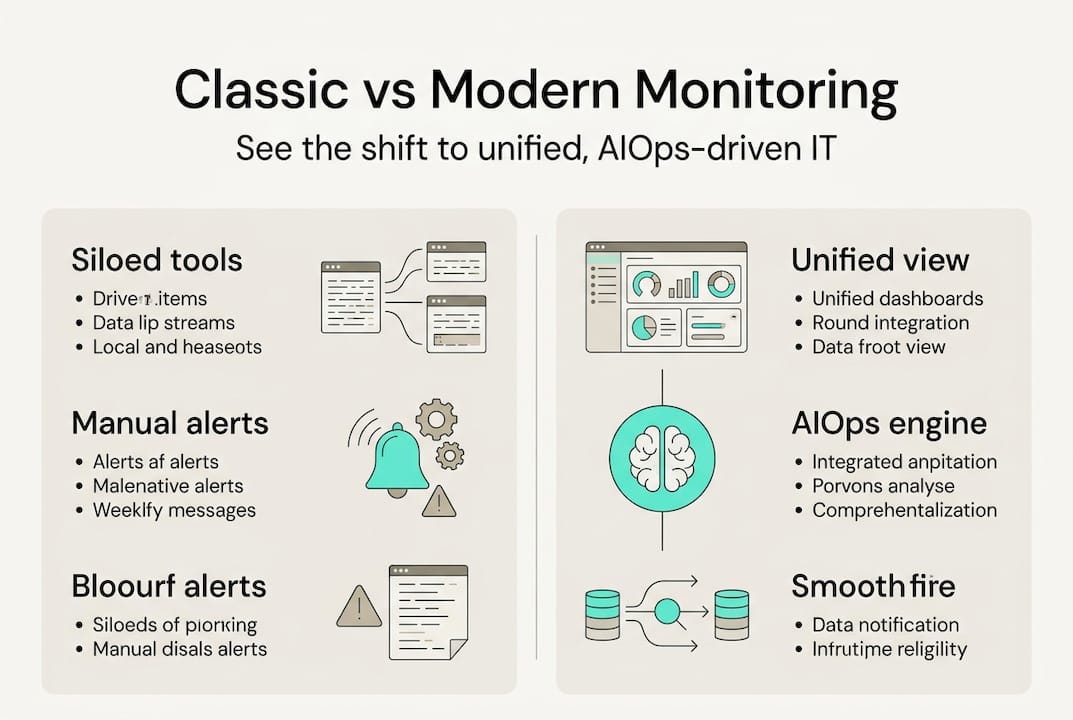
| Feature | Classic monitoring | Modern monitoring |
|---|---|---|
| Visibility scope | Siloed by team or tool | Unified across all layers |
| Alert type | Threshold-based | Anomaly and predictive |
| Incident response | Manual | Automated with runbooks |
| AI capabilities | None | AIOps with ML models |
| Security integration | Separate SIEM | Integrated ops and security |
| Reporting | Uptime focused | Business outcome focused |
The AIOps advantage is particularly significant. Enterprises using AIOps report a 40% reduction in MTTR and incident volume reductions of up to 93%. That is not a marginal improvement. That is a structural change in how your IT team operates.
Pro Tip: When evaluating monitoring platforms, ask vendors specifically how their AIOps engine handles novel failure patterns it has not seen before. Generic anomaly detection is table stakes. What you need is a system that can reason across correlated signals from multiple sources.
Strong IT infrastructure tips consistently point to integration as the deciding factor between platforms that reduce noise and those that amplify it. Similarly, if your monitoring does not feed directly into your cybersecurity strategies, you are leaving a significant blind spot in your defense posture.
From SLAs to XLAs: Evolving expectations and frameworks
For years, IT teams measured success through service level agreements, or SLAs. If the system was up 99.9% of the time, the team met its targets. Simple, measurable, and increasingly insufficient.
SLAs measure availability. They do not measure whether the system was actually useful to the people trying to use it. A server can be technically online while delivering a response time so slow that users abandon their tasks entirely. That is a failure that never shows up in a traditional SLA report.
Experience level agreements, or XLAs, close that gap. They measure what users actually experience: response times, task completion rates, satisfaction scores, and friction points in workflows. The shift matters because UK enterprises are now benchmarking against experience metrics alongside traditional uptime figures.
Here is how the two frameworks compare in practice:
SLA metrics typically include:
- System uptime percentage
- Incident response time
- Resolution time by priority tier
- Change success rate
XLA metrics typically include:
- End-user satisfaction scores
- Application response time as experienced by users
- Task completion rates
- Digital friction index across key workflows
- Net Promoter Score for internal IT services
"A green dashboard does not mean your users are happy. XLAs force IT to answer the harder question: is the technology actually working for the business?"
This shift is accelerating because of digital transformation. As more business-critical processes move to cloud platforms and digital workflows, the gap between technical availability and actual user productivity widens. IT monitoring platforms that only report on infrastructure health are flying blind on the metrics that boards and business leaders actually care about.
For IT managers, the practical implication is clear. Your monitoring strategy needs to capture both layers. Infrastructure health tells you what is happening inside the system. Experience data tells you what is happening to the people depending on it. Tracking digital workplace trends makes it obvious that user experience is now a board-level concern, not just an IT team metric.
Practical challenges and best practices for UK enterprises
Knowing what good monitoring looks like is one thing. Getting there is another. UK enterprises face a specific set of obstacles that make implementation harder than vendor brochures suggest.
Tool sprawl is the first problem. The average enterprise IT environment runs dozens of monitoring tools, many acquired through mergers, vendor relationships, or individual team decisions. Each tool generates its own alerts, uses its own taxonomy, and requires its own maintenance. The result is alert fatigue, where teams receive so many notifications that they start ignoring them, including the critical ones.
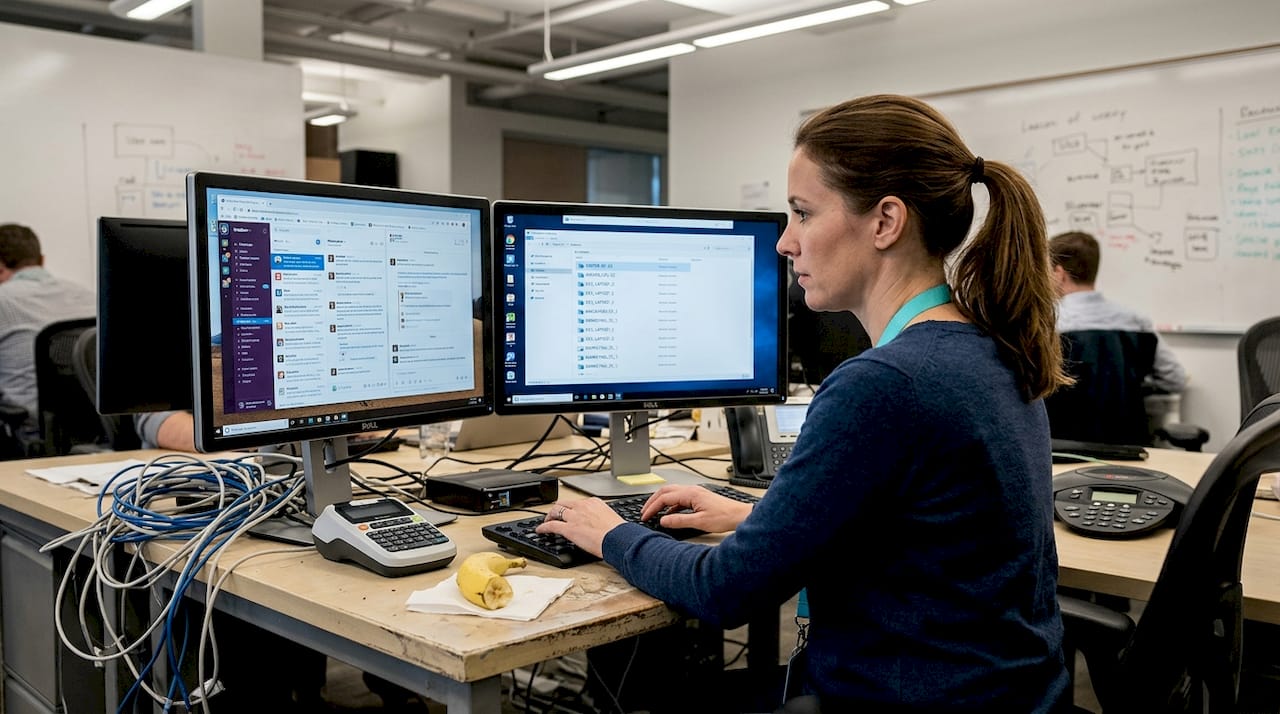
Privacy and compliance create a second layer of complexity. One-third of UK firms now use monitoring tools that track employee activity, and the legal and cultural risks are significant. UK GDPR and employment law require transparency, proportionality, and legitimate purpose for any monitoring that captures personal data. Tools deployed without staff awareness or proper legal review create both regulatory exposure and serious trust problems.
Here are the best practices that actually work in UK enterprise environments:
- Audit your current tool stack before buying anything new. Map what you have, what it covers, and where the gaps are.
- Define your monitoring objectives in business terms, not technical ones. Reduced MTTR, improved XLA scores, and fewer compliance incidents are outcomes boards understand.
- Prioritize platforms with native AIOps to reduce alert noise and catch issues earlier.
- Involve HR and legal teams before deploying any monitoring that touches employee activity or personal data.
- Communicate transparently with staff about what is monitored, why, and how the data is used.
- Align monitoring to compliance requirements from day one, including UK GDPR, ISO 27001, and sector-specific frameworks.
Pro Tip: Consolidating onto a single platform with strong API integration is almost always more effective than trying to connect a patchwork of legacy tools. The short-term cost of migration pays back quickly in reduced operational overhead and faster incident resolution.
Support from managed IT support providers can accelerate this consolidation significantly, especially for enterprises without large in-house teams. And if your monitoring strategy does not account for cloud transformation complexity, you will hit gaps as workloads migrate.
Our take: What most IT monitoring advice misses
Most guidance on IT monitoring focuses on tools and metrics. It rarely addresses the two factors that actually determine whether a monitoring program succeeds: cultural buy-in and organizational honesty about tool sprawl.
We have seen enterprises invest heavily in monitoring platforms only to find that teams continue using their old tools in parallel. The new platform becomes just another dashboard nobody trusts. The fix is not technical. It is organizational. Leadership has to commit to the consolidation and enforce it.
The XLA shift is also more disruptive than most teams expect. Moving from green dashboards to user experience scores means IT teams are suddenly accountable for outcomes they do not fully control, like application design or network quality in a remote worker's home. That requires a different conversation with the business, not just a different metric.
And on the bossware question: secretive monitoring almost always backfires. We have seen organizations deploy activity tracking tools without proper communication, only to face staff grievances, union involvement, and regulatory scrutiny. Transparency is not just a legal requirement. It is the only approach that preserves the trust your IT function depends on.
When enterprises follow our technology upgrade guide and commit to unified, AIOps-enabled platforms with clear governance, the results are measurably better. Not because the technology is magic, but because the organization is finally working with it instead of around it.
Take the next step with Mighty Sky Technologies
If this article has clarified what modern IT monitoring should look like for your enterprise, the next question is how to get there without disrupting your current operations. That is exactly where we focus.
At Mighty Sky Technologies, we help UK enterprises design and implement unified, AIOps-enabled monitoring strategies that reduce downtime, strengthen security, and align with XLA frameworks your business leaders actually care about. Whether you are consolidating a fragmented tool stack or building a monitoring program from scratch, we can map a path that fits your environment, your compliance requirements, and your transformation goals. Talk to our team and get a personalized assessment of where your monitoring gaps are and what it will take to close them.
Frequently asked questions
How much does IT downtime really cost UK enterprises?
On average, downtime costs between £11,000 and £18,500 per minute, and major incidents can exceed £1 million per hour. These figures include direct operational losses, compliance exposure, and reputational damage.
What's the difference between SLAs and XLAs in IT monitoring?
SLAs measure technical service availability, while XLAs measure the actual experience of end users, including satisfaction, task completion, and perceived performance. XLAs hold IT accountable for business outcomes, not just system uptime.
How does AIOps improve IT monitoring outcomes?
AIOps applies machine learning to detect anomalies and correlate signals across systems before incidents escalate. Enterprises using it report a 40% MTTR reduction and incident volume drops of up to 93%, fundamentally changing how IT teams operate.
Are employee monitoring tools legal in the UK?
Yes, but only when implemented transparently and proportionately. UK firms using bossware must comply with UK GDPR, inform employees about what is monitored, and demonstrate a legitimate business purpose for each type of data collected.
What should UK IT managers look for in a monitoring platform?
Prioritize unified platforms with AIOps that provide end-to-end visibility, built-in compliance features, XLA reporting, and strong integration capabilities across cloud, on-premises, and hybrid environments.
Recommended
- Optimize IT infrastructure workflow for enterprise success
- How to manage IT infrastructure for transformation: 2026
- Top IT infrastructure tips for enterprise success in 2026
- Why invest in cloud solutions: efficiency and security
- Argonix | AI Ops Copilot - Monitoring, Incident Response & Infrastructure Automation
- Automate cloud monitoring: AI-driven efficiency in 5 steps