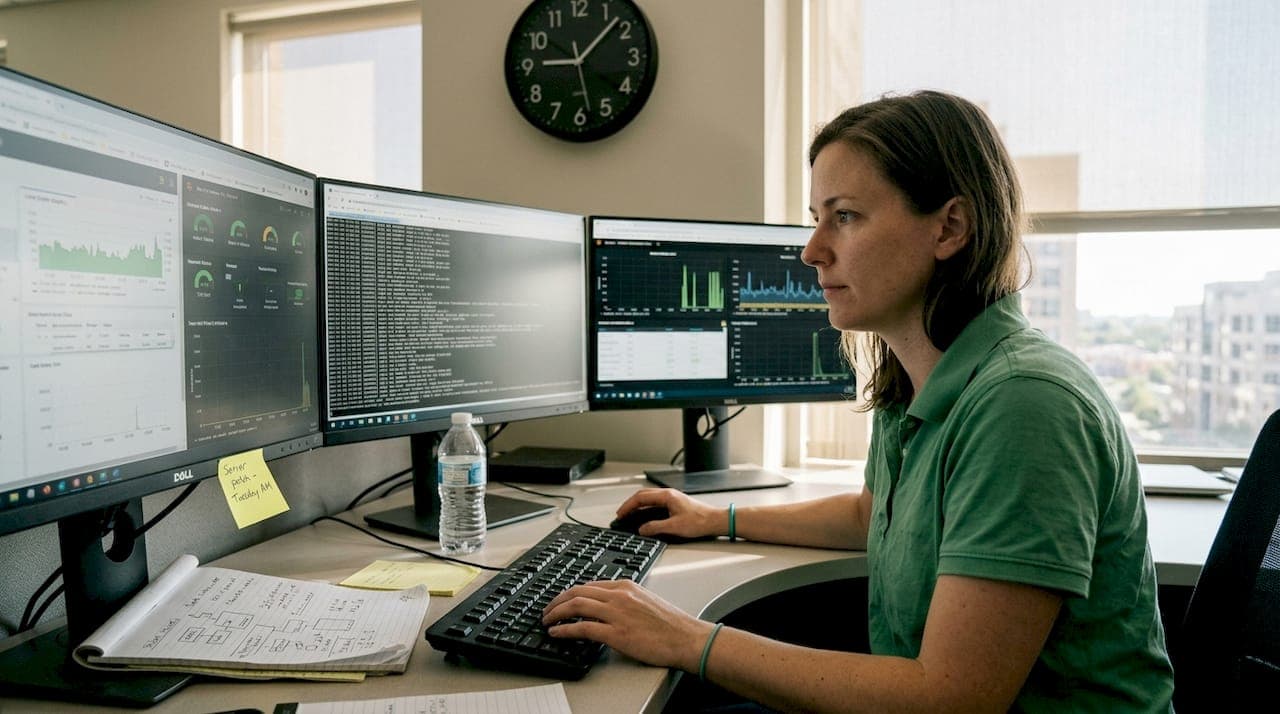
TL;DR:
- Modern monitoring is essential for managing complex hybrid, cloud, and microservices environments.
- Integration of AI and unified platforms significantly reduces downtime and enhances proactive issue resolution.
- Successful observability requires process, governance, clear ownership, and continuous review beyond just technology.
With 91% of UK IT leaders planning to increase observability budgets, one thing is clear: traditional monitoring is no longer cutting it. Hybrid cloud environments, microservices, and distributed workloads have created infrastructure complexity that legacy alert-and-wait approaches simply cannot manage. Yet many organizations are still running on fragmented tools and reactive workflows, leaving them exposed to outages, compliance gaps, and ballooning costs. This article cuts through the noise to explain why modern monitoring is a strategic priority, what it actually delivers, and how UK IT leaders can turn it into a genuine competitive advantage.
Table of Contents
- Why monitoring is foundational to infrastructure success
- Core components: What effective monitoring delivers
- Why UK IT leaders are upgrading to observability and AIOps
- Best practices: Turning monitoring into transformation
- Perspective: Why most IT monitoring strategies stall—and how to succeed
- Optimizing your IT infrastructure with expert support
- Frequently asked questions
Key Takeaways
| Point | Details |
|---|---|
| Modern monitoring is essential | Monitoring now underpins IT resilience, efficiency, and compliance as complexity grows. |
| AIOps and observability drive results | Innovative UK leaders cut downtime and optimize costs by advancing from traditional monitoring. |
| Unified strategy avoids common pitfalls | Combining platforms, governance, and education prevents tool sprawl and data fatigue. |
| Continuous improvement is key | IT monitoring requires ongoing review and adjustment—not just new tools or set-and-forget. |
Why monitoring is foundational to infrastructure success
Monitoring used to mean setting thresholds and waiting for alerts. That was fine when infrastructure lived in a single data center and changed once a quarter. Today, a medium-sized UK enterprise might run workloads across three cloud providers, dozens of SaaS platforms, and on-premises hardware, all at the same time. The gap between what your old tools can see and what is actually happening in your environment is where outages, security incidents, and budget waste hide.
The strategic shift is real. UK IT organizations are sharpening their investment in observability precisely because the cost of not monitoring effectively is now measurable and significant. As research confirms, monitoring optimizes IT operations by reducing downtime, enabling proactive issue resolution, improving resource utilization, and supporting compliance. These are not soft benefits. They translate directly to revenue protection, audit readiness, and lower operational overhead.
"Monitoring is no longer an IT function. It is a business continuity strategy."
For IT directors managing hybrid environments, the IT monitoring benefits go well beyond keeping the lights on. Here is what modern monitoring actually delivers for UK businesses:
- Reduced unplanned downtime through early anomaly detection before users are affected
- Proactive issue resolution that shifts teams from firefighting to prevention
- Cost optimization by identifying unused or over-provisioned resources in real time
- Compliance support with audit trails, access logs, and automated reporting
- Improved capacity planning backed by trend data rather than gut instinct
Think of it this way: monitoring is the sensory system of your IT infrastructure. Without it, you are flying blind. And in 2026, flying blind is not just risky, it is commercially irresponsible. If you want to see how this connects to broader infrastructure strategy, the top infrastructure tips for enterprise success are worth reviewing alongside your monitoring roadmap.
Core components: What effective monitoring delivers
Effective monitoring is not a single tool or dashboard. It is a layered architecture that captures different types of operational data and turns them into actionable intelligence. Modern IT environments require four core data streams: metrics (CPU, memory, latency), logs (event records for diagnosis), traces (end-to-end request paths across services), and increasingly, behavioral and AI-driven data that detects patterns no human analyst could spot manually.
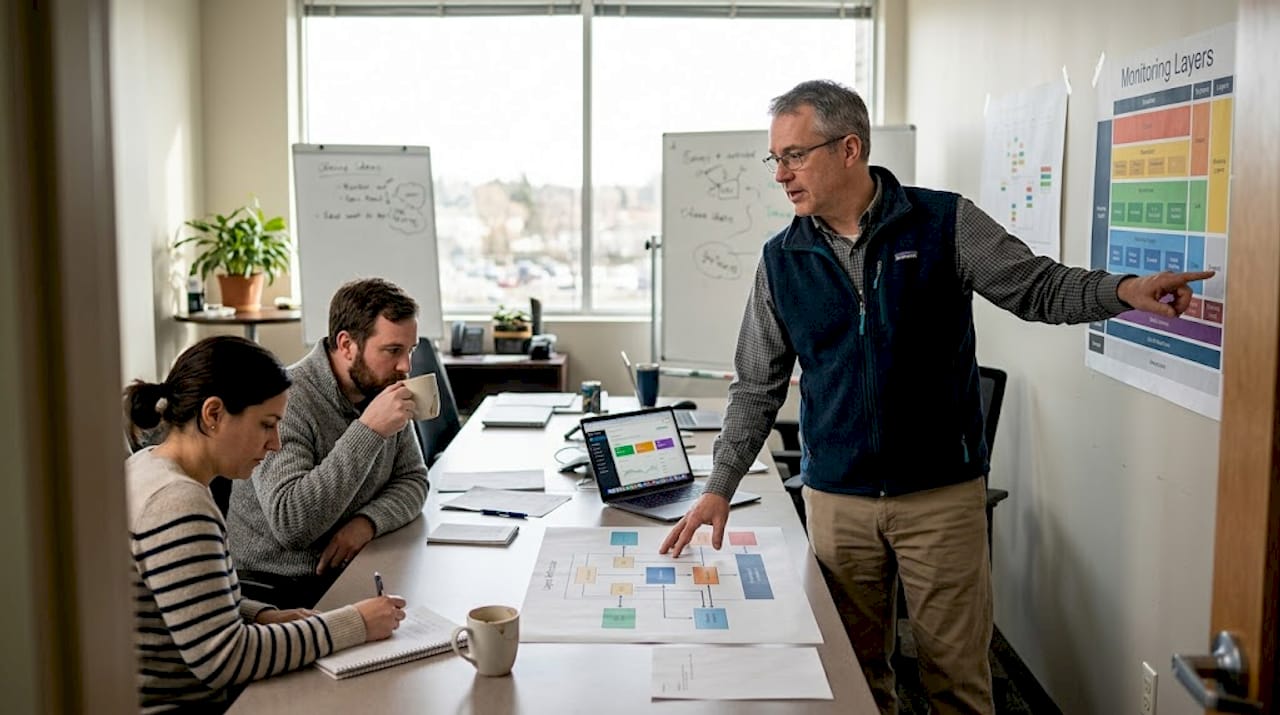
Here is how monitoring maturity levels compare in practice:
| Capability | Traditional monitoring | Modern monitoring | Next-gen (AIOps) |
|---|---|---|---|
| Data types | Metrics only | Metrics + logs | Metrics + logs + traces + behavior |
| Issue detection | Reactive alerts | Threshold-based proactive | Predictive anomaly detection |
| MTTR improvement | Baseline | Up to 33% faster | Up to 55% faster |
| Automation level | Manual response | Semi-automated | Fully automated root cause analysis |
| Proactive resolution % | Low | Moderate | High |
AIOps, which stands for artificial intelligence for IT operations, dramatically accelerates root cause analysis by correlating signals across thousands of data points simultaneously. Research shows MTTR reductions of 33-55% and project efficiency improvements of 20-35% when AIOps is integrated with monitoring pipelines.
For IT managers building or upgrading their monitoring stack, implementation typically follows a clear progression:
- Establish baseline metrics for all critical systems and services
- Unify data collection into a single platform to eliminate blind spots
- Define alert thresholds based on business impact, not just technical limits
- Integrate log and trace pipelines for full-stack visibility
- Layer in AI and automation for anomaly detection and self-healing responses
- Set SLOs (Service Level Objectives) to tie monitoring outcomes to business goals
- Run regular reviews to refine baselines and retire redundant alerts
Pro Tip: Avoid tool sprawl at all costs. Running five separate monitoring tools creates data silos and alert fatigue, where engineers become desensitized to notifications. Choose a unified observability platform and build from there. For context on broader UK IT management strategies, consolidation is consistently a top recommendation. It also pays to understand infrastructure types and security implications before selecting your toolset.
Why UK IT leaders are upgrading to observability and AIOps
UK businesses are not just keeping pace with global monitoring trends. They are leading them. Research shows that 86% of UK organizations are boosting monitoring spend, and 44% have already embedded full AI into their observability workflows. Critically, the primary driver is cost optimization and performance improvement, not just outage prevention.
This is a meaningful shift. It signals that IT monitoring has moved from being a defensive measure to an offensive business tool. When you can see exactly where compute budget is being wasted, where latency is degrading customer experience, and where a service is trending toward failure, you can act before the impact hits the bottom line.
Key stat: 44% of UK organizations now have full AI embedded in observability workflows, well ahead of most European counterparts.
Here is a direct comparison of where monitoring, observability, and AIOps differ and why it matters:
| Feature | Monitoring | Observability | AIOps |
|---|---|---|---|
| Core question answered | "Is it up?" | "Why did it fail?" | "What will fail next?" |
| Data scope | Predefined metrics | Metrics + logs + traces | All data + behavioral patterns |
| UK adoption rate (2026) | Near universal | Growing rapidly | 44% with full integration |
| Primary value | Uptime assurance | Faster diagnosis | Predictive prevention + automation |
| Key challenge | Limited visibility | Data volume management | Governance and skill gaps |
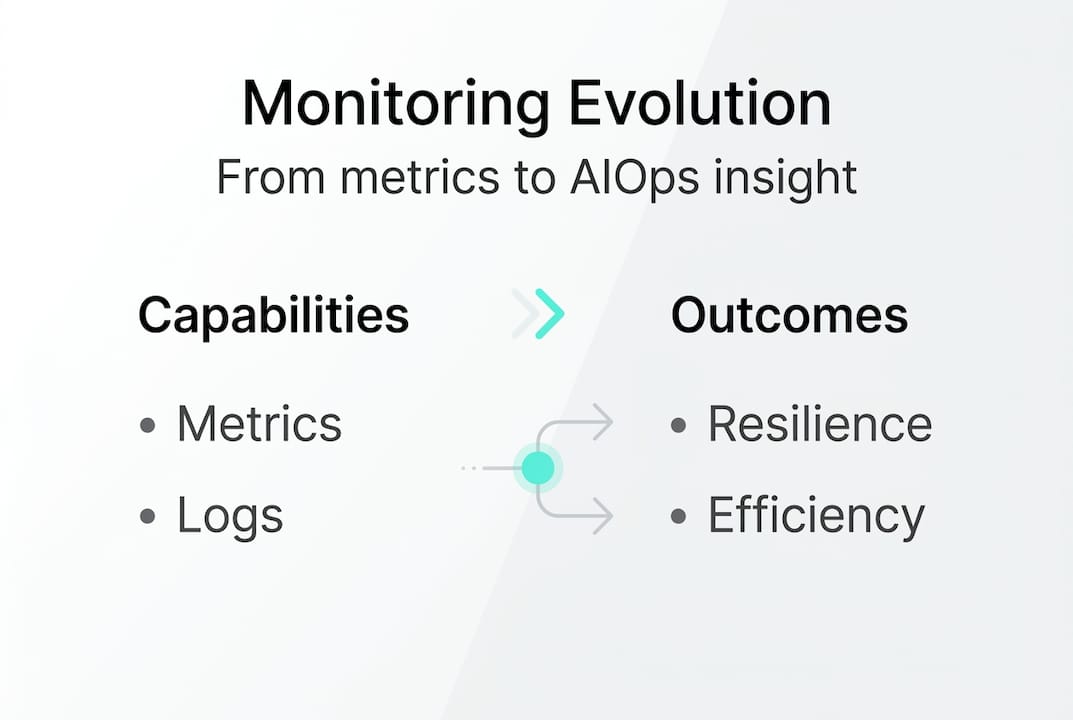
Tool fragmentation remains the biggest barrier. Many IT teams are operating 10 or more monitoring products across their stack, which makes unified data analysis nearly impossible. AI and cloud execution gaps are compounding this problem, as teams lack the integration expertise to connect new AI tooling with existing infrastructure.
Pro Tip: Integrate FinOps practices (financial operations for cloud cost management) directly into your observability platform. When engineering and finance teams share the same cost visibility dashboards, you close the gap between technical decisions and budget outcomes fast. For teams actively managing IT transformation, this is one of the highest-leverage moves available.
Best practices: Turning monitoring into transformation
Knowing what monitoring should do and actually getting it to work at scale are two different things. Many UK IT teams have the right tools but are getting poor results because of process and governance gaps, not technology limitations. Here is what separates effective monitoring programs from those that stall.
Priority actions for IT leaders in 2026:
- Unify your platform: Consolidate metrics, logs, traces, and events into one observability stack
- Define clear SLOs: Service Level Objectives give monitoring a business context, not just a technical one
- Assign ownership: Every monitored service should have a named team responsible for its health
- Automate alerting intelligently: Route alerts by severity and ownership, not just to everyone at once
- Integrate FinOps: Connect observability data to cloud cost dashboards for real-time spend visibility
- Run regular baseline reviews: What was normal six months ago may not be normal today
As research recommends, unified observability with clear SLOs and defined ownership are the highest-impact steps UK managers can take to avoid the common traps of fatigue and data overload.
Common pitfalls to avoid: tool fatigue from running overlapping monitoring solutions, data overload from collecting everything without filtering for relevance, and lack of ownership where alerts fire but nobody acts because accountability is unclear.
Pro Tip: Schedule quarterly monitoring reviews, not just annual ones. Infrastructure changes fast, and baselines set at deployment are often obsolete within months. Invest in short, focused training sessions for your team so they can interpret observability data confidently, not just escalate alerts. Explore infrastructure workflow optimization strategies to build review cycles into your standard operating procedures. Pairing this with strong service management efficiency practices creates a feedback loop that continuously sharpens your monitoring program.
Monitoring is not a one-time project. It is an ongoing discipline that evolves alongside your infrastructure. Teams that treat it as set-and-forget are the ones still scrambling after the next outage.
Perspective: Why most IT monitoring strategies stall—and how to succeed
Here is something we see repeatedly: organizations invest in excellent monitoring tools and still get poor results. The reason is almost never the technology. It is culture and process.
Most monitoring programs are built around dashboards, not outcomes. Teams measure what is easy to measure rather than what matters to the business. Alerts pile up. Engineers develop threshold blindness. And when something truly critical happens, it gets buried under noise.
The harder truth is that UK businesses face a specific friction that budgets and tooling cannot solve alone: governance gaps and unclear accountability between infrastructure, security, and application teams. IT monitoring transformation only happens when a senior IT leader takes ownership of outcomes, not just tools.
Our advice: before buying the next observability platform, map out who owns each service, what the SLOs are, and how alerts translate into business impact. Fix the process first. The tools will work far better once the human framework supports them.
Optimizing your IT infrastructure with expert support
Building a monitoring program that genuinely transforms IT operations takes more than software. It takes architecture experience, process design, and the ability to connect technical data to business decisions. That is exactly where Mighty Sky Tech adds value for UK organizations.
From infrastructure assessment and observability platform design to AIOps integration and ongoing managed support, the team at Mighty Sky Tech works alongside IT leaders to build monitoring strategies that deliver real, measurable results. Whether you are consolidating a fragmented tool stack or building observability from scratch, we bring the expertise to make it stick. Reach out to start a conversation about where your infrastructure stands and what a smarter monitoring approach could look like for your organization.
Frequently asked questions
What is the difference between monitoring and observability?
Monitoring tracks known problems with predefined alerts, while observability enables deeper understanding and troubleshooting of unexpected issues across complex systems. As monitoring evolves into full observability, it incorporates AI-driven behavioral data that goes well beyond traditional threshold alerts.
How does monitoring reduce downtime in IT infrastructure?
Monitoring enables proactive issue detection and resolution before users are affected, cutting mean time to repair significantly. MTTR reductions of 33-55% are achievable when AIOps is integrated into monitoring pipelines.
Why are UK IT leaders prioritizing monitoring in 2026?
UK IT leaders are responding to rising infrastructure complexity and the need for cost optimization by investing in observability and AI tools. UK organizations increasing spend on monitoring reflects a shift from purely reactive protection to proactive performance management.
What challenges do businesses face with monitoring tools?
Fragmented tools, data overload, and lack of unified governance are the most common barriers limiting results. Tool fragmentation and data unification remain critical blockers for organizations trying to scale AI-driven observability effectively.