
UK businesses face a critical challenge in 2026: outdated technology systems that drain productivity and hinder growth. Many organizations struggle with legacy infrastructure, disconnected tools, and skills gaps that prevent effective digital transformation. Yet government data shows companies leveraging modern AI and cloud solutions achieve 15-35% productivity gains when paired with proper integration and training. This guide provides actionable strategies to optimize your technology stack, avoid common pitfalls, and access UK government resources that accelerate meaningful business outcomes.
Table of Contents
- Preparing To Optimize Your Business Technology
- Executing Effective Technology Optimization Strategies
- Verifying Optimization Success And Continuous Improvement
- Discover Technology Solutions With Mighty Sky Technologies Limited
- FAQ
Key takeaways
| Point | Details |
|---|---|
| Align technology with business goals | Conduct maturity assessments across strategy, leadership, culture, and technology before investing in new systems. |
| Leverage government support programs | Made Smarter and Help to Grow initiatives provide funding and expertise to accelerate digital adoption. |
| Avoid common optimization traps | Overconfidence in AI tools and adding complexity without simplification leads to automation purgatory. |
| Monitor measurable outcomes | Track KPIs like utilization rates, MTTR, and productivity metrics to verify ROI and guide continuous improvement. |
| Prioritize skills development | Technology investments fail without training teams to use new tools effectively and close capability gaps. |
Preparing to optimize your business technology
Successful technology optimization starts long before you purchase new software or migrate to the cloud. You need a clear understanding of where your organization stands today and where you want to go tomorrow.
Begin by conducting comprehensive maturity assessments. The UK government recommends you prioritize alignment of business strategy and conduct maturity assessments across nine dimensions including leadership commitment, workforce skills, and existing technology readiness. This diagnostic approach reveals gaps between your current capabilities and transformation goals. Many IT leaders skip this step, jumping straight to solution shopping, which leads to misaligned investments that solve the wrong problems.
Define clear business outcomes before evaluating technology options. Ask yourself what specific challenges you need to solve. Are you trying to reduce operational costs by 20%? Improve customer response times? Enable remote collaboration across multiple offices? Technology should serve these objectives, not the other way around. When you anchor decisions in measurable business results, you avoid the trap of adopting flashy tools that look innovative but deliver minimal value.
Identify your most pressing challenges with brutal honesty:
- Legacy systems that cannot integrate with modern platforms
- Skills shortages preventing effective use of existing tools
- Data silos blocking informed decision making
- Security vulnerabilities exposing business risks
- Manual processes consuming excessive staff time
Small and medium enterprises face unique barriers here. Budget constraints limit experimentation, and smaller teams mean every technology choice carries higher stakes. The good news is government support programs specifically target SMEs struggling with digital adoption. Programs like Made Smarter offer subsidized consulting and technology trials that reduce financial risk during your preparation phase.
Pro Tip: Create a simple scoring matrix rating each technology gap by business impact and implementation difficulty. Focus your optimization efforts on high impact, lower difficulty wins first to build momentum and demonstrate ROI quickly.
Partnering with experienced IT consultancies like Mighty Sky Technologies Limited during this preparation phase ensures you ask the right questions and avoid costly false starts. External expertise helps you see blind spots internal teams often miss.
Executing effective technology optimization strategies
Once you have completed your preparation work, you can execute optimization strategies with confidence. Follow these proven steps to modernize your technology infrastructure systematically.
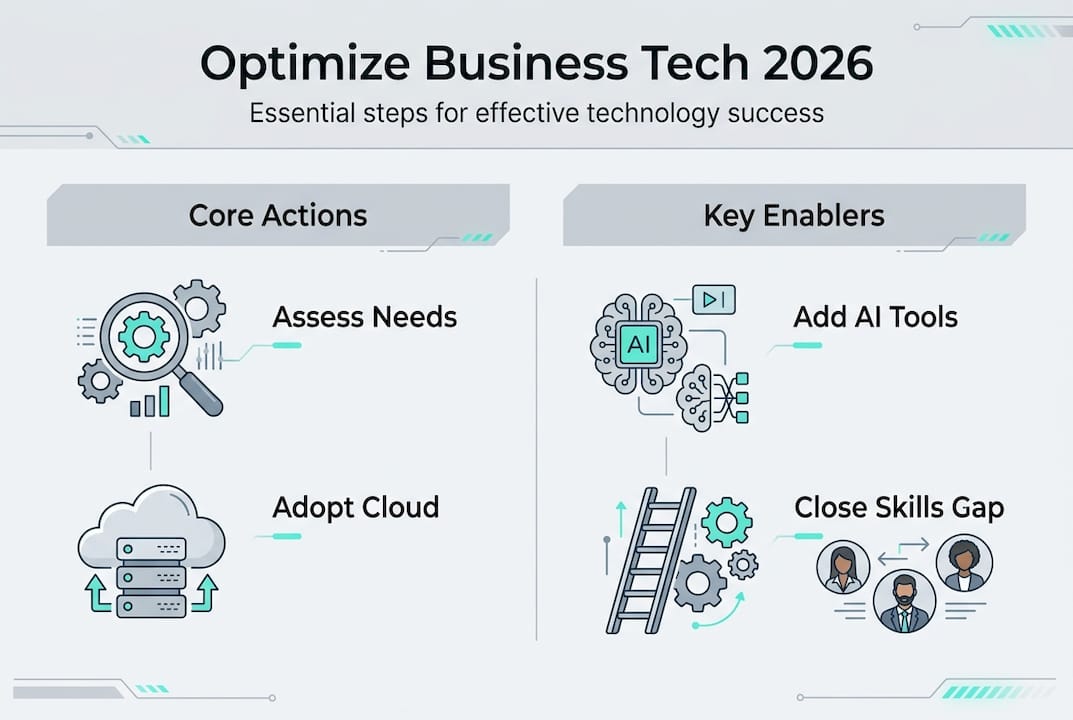
Step 1: Adopt hybrid or cloud infrastructures tailored to your specific business needs. Not every workload belongs in the public cloud, and not everything should stay on premises. Evaluate each system based on performance requirements, data sensitivity, compliance obligations, and cost efficiency. Hybrid approaches give you flexibility to place workloads where they perform best while maintaining control over critical assets.
Step 2: Integrate AI powered tools to automate repetitive tasks and enhance decision making. Start with narrow, well defined use cases rather than enterprise wide AI transformation. Document processing, customer service chatbots, and predictive maintenance represent practical entry points. Research shows UK organizations achieve 15-35% productivity gains when they combine AI tools with proper skills development and system integration. The technology alone delivers limited value without these supporting elements.
Step 3: Leverage government programs designed to accelerate SME digital adoption. Made Smarter provides matched funding for technology projects in manufacturing and engineering sectors. Help to Grow offers subsidized management training and digital platform access. These programs reduce your financial burden while connecting you with vetted technology providers and implementation partners.
Step 4: Rightsize your technology investments to avoid unnecessary complexity. Bigger is not always better. Overengineered solutions create maintenance headaches, require specialized skills you may not have, and often sit underutilized. Choose tools that solve your current problems with room to scale, not enterprise platforms designed for organizations ten times your size.
Step 5: Focus relentlessly on training and closing skills gaps. Technology optimization fails when your team cannot use new systems effectively. Budget 20-30% of your technology investment for training, documentation, and change management. Create internal champions who can support colleagues and troubleshoot common issues without always escalating to IT.
| Approach | Key Benefits | Common Challenges | Typical ROI Timeline |
|---|---|---|---|
| Cloud migration | Scalability, reduced capital expense, faster deployment | Data sovereignty concerns, migration complexity | 12-18 months |
| AI automation | Labor savings, improved accuracy, 24/7 availability | Integration requirements, skills gaps | 6-12 months |
| Strategic partnerships | Access to expertise, shared risk, faster implementation | Vendor dependency, cultural alignment | 9-15 months |
Pro Tip: Implement changes in phased rollouts rather than big bang deployments. Pilot new technology with a small team, gather feedback, refine your approach, then scale to broader groups. This reduces disruption and allows you to course correct before problems multiply.
Working with specialists like Mighty Sky Technologies Limited during execution ensures you have expert guidance when unexpected challenges arise. Their experience across diverse client environments means they have likely solved problems similar to yours before.
Verifying optimization success and continuous improvement
Optimization is not a one time project but an ongoing discipline. You must verify that your technology investments deliver promised results and establish processes for continuous improvement.
Monitor key performance indicators that directly tie to business outcomes. Track metrics like:
- System utilization rates showing adoption levels
- Mean time to recovery (MTTR) measuring reliability improvements
- Productivity metrics quantifying efficiency gains
- Customer satisfaction scores reflecting service enhancements
- Cost per transaction demonstrating operational savings
Establish feedback loops connecting frontline users with decision makers. Your team members using technology daily spot issues and opportunities leadership often misses. Create regular forums where they can share observations, suggest improvements, and highlight roadblocks. This grassroots intelligence drives smarter optimization decisions than top down mandates alone.
Watch carefully for warning signs that optimization efforts are going sideways. Integration lags where new systems cannot communicate with existing tools create data silos and duplicate work. System complexity increasing without corresponding simplification leads to what experts call automation purgatory, where you have more technology but less productivity. UK public sector trials found AI coding assistants save 56 minutes per day per user, but only when properly integrated into existing workflows with adequate training.
Use data tables to track performance before and after optimization initiatives:
| Metric | Baseline (Q1 2026) | Post Optimization (Q3 2026) | Improvement |
|---|---|---|---|
| Help desk ticket volume | 450/month | 280/month | 38% reduction |
| System uptime | 96.5% | 99.2% | 2.7% increase |
| Employee productivity score | 72/100 | 89/100 | 24% improvement |
| IT cost per employee | £850/year | £720/year | 15% decrease |
Address skills development as an ongoing priority, not a one time training event. Technology evolves rapidly, and your team needs regular upskilling to maximize value from your systems. Budget for continuous learning through online courses, certifications, vendor training, and peer knowledge sharing.
"The biggest risk in AI adoption is overconfidence. Organizations assume AI tools will automatically deliver value without investing in proper integration, data quality, and user training. This leads to disappointing results and wasted investment." Industry experts emphasize the importance of realistic expectations and thorough preparation.
Engage partners like Mighty Sky Technologies Limited for periodic health checks of your technology environment. External reviews identify optimization opportunities internal teams overlook due to familiarity or resource constraints.
Discover technology solutions with Mighty Sky Technologies Limited
Optimizing business technology requires more than just buying the right tools. You need a strategic partner who understands your industry challenges, UK regulatory environment, and practical constraints of implementation.
Mighty Sky Technologies Limited specializes in helping UK businesses navigate complex digital transformation journeys. Their experts guide you through AI adoption, cloud migration, and automation strategies aligned with your specific business goals. They work with you to access government programs like Made Smarter and Help to Grow, maximizing available support for your technology investments. Whether you need managed IT support, cybersecurity enhancements, or comprehensive infrastructure modernization, Mighty Sky Technologies Limited delivers tailored solutions that produce measurable results. Contact their team today to start your optimization journey with confidence.
FAQ
How do I assess my business's digital maturity before optimizing technology?
Use frameworks that evaluate your organization across strategy, leadership, culture, and technology dimensions. Government resources and trusted IT consultancies offer assessment tools specifically designed for UK SMEs. These evaluations reveal gaps between current capabilities and transformation goals, helping you prioritize investments that address your most critical needs first.
What are common pitfalls to avoid during technology optimization?
Avoid automation purgatory where you add complexity without simplifying underlying processes, resulting in more technology but less productivity. Ensure proper training programs to overcome skills shortages, as even the best tools fail without capable users. Do not rush AI adoption without clear integration plans and realistic expectations about implementation timelines and resource requirements.
Which government programs can support my digital transformation efforts in the UK?
The Made Smarter program provides matched funding and expert guidance for manufacturing and engineering businesses adopting advanced digital technologies. Help to Grow initiatives offer subsidized management training and access to digital tools for SMEs across sectors. The SME Digital Adoption Taskforce has published comprehensive resources outlining support available for businesses at different maturity stages.
How can I measure ROI after optimizing business technology?
Track KPIs directly tied to business outcomes, including system utilization rates, productivity increases, mean time to recovery, and cost savings per transaction. Compare performance data before and after optimization using consistent measurement methods. Establish regular review cycles to assess progress, gather user feedback, and identify opportunities for continuous improvement that compound your initial ROI over time.